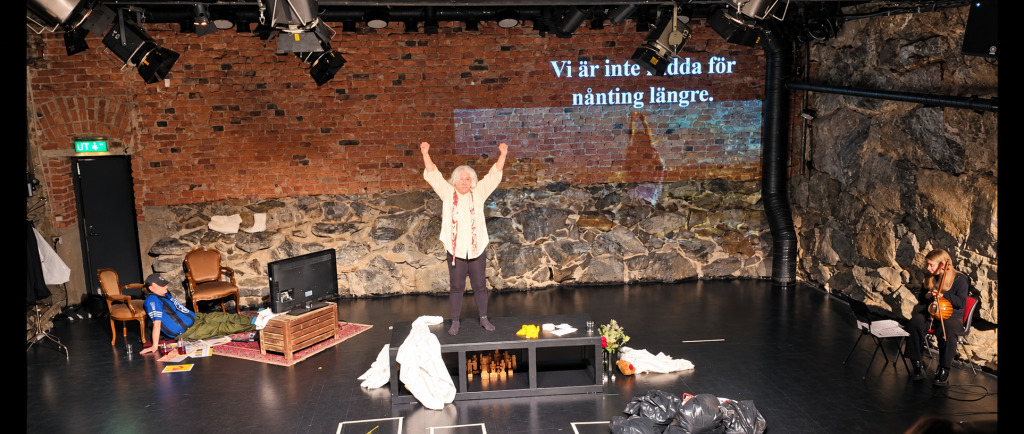
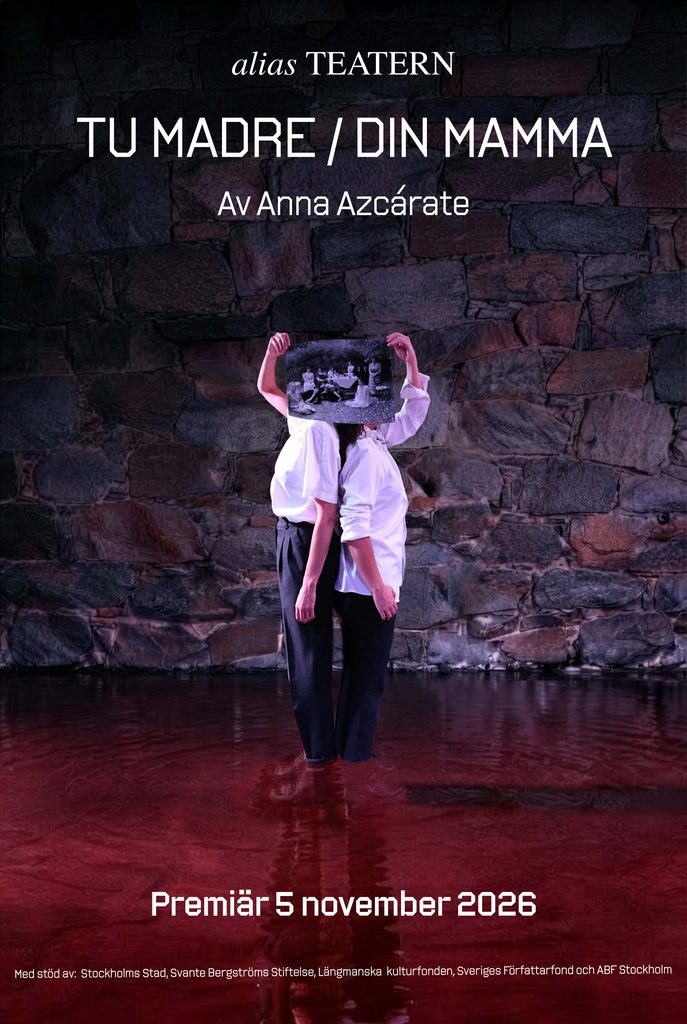
Din Mamma (Your Mother), written and directed by Anna Azcárate and performed in Stockholm, takes audiences back to one of the darkest periods in Spain’s history: the dictatorship of Francisco Franco. To save her daughter’s life, a mother entrusts her child to her sister and brother-in-law. She then accepts a painful new role in her daughter’s life: that of Aunt Carmen.
Azcárate challenges the audience to consider morality under the pressures of dictatorship. Is the mother’s decision to conceal the truth, even from her own daughter, morally wrong? Or can hiding the truth be an act of care when a child’s survival is at stake? What does it mean to judge a mother’s choices when those choices are shaped by fear and persecution?
While these moral questions lie at the heart of the story, some audience members may find that Franco’s dictatorship becomes its most powerful presence. For those familiar with political repression, Carmen’s suffering reaches beyond Spain. Imprisonment, torture, enforced disappearance, execution, and violence against children have left mothers in many countries facing devastating losses and impossible decisions.
These experiences are not identical. Each country has its own history, and each mother her own story. Yet there are painful similarities in the ways dictatorships use fear and violence to enter family life. Their power extends beyond prisons and interrogation rooms: it reshapes relationships, silences memories, and forces people to conceal who they are.
Carmen’s silence can therefore be understood as both protection and loss. She keeps her daughter safe, but at the cost of being known as her mother. Her daughter, too, lives with the consequences of a truth withheld from her. The possibility that concealment was necessary does not erase its emotional cost.
Din Mamma offers audiences an opportunity to reflect on the impossible choices mothers face under dictatorship—and the lasting consequences of political violence within families. Across languages and borders, the word “mother” carries a shared human meaning, even as each woman’s experience remains her own.
Perhaps the play’s deepest question is not simply whether Carmen was right or wrong to hide the truth. It is what kind of political order makes a mother’s love take such a painful form. Before judging her silence, we must confront the violence that made it necessary—and ask what remains of that violence in the lives of those who survive.
For performance dates and tickets to Din Mamma, visit the alias Teatern website