Introduction
In the first month of summer 1403 (21 June to 21 July 2024), Iran witnessed a 2.5-fold increase in the number of executions compared to the previous month, Khordad. It is important to note that from 8th to 15th July, there were no reports of executions by Iranian state media or human rights reporters.
This report aims to raise awareness within the international and domestic community, create grounds for increased pressure on the Iranian government to respect human rights and international laws, and encourage citizens to participate in human rights discussions and activities, providing a platform for the voices of victims and their families. We hope this report will play an effective role in improving legal and human rights standards in Iran.
Report Content
In the first month of summer (Tir) 1403 (21 June to 21 July 2024), a total of 28 executions were recorded in Iran. It is important to note that many executions are not reported by domestic media or the judiciary, and human rights reporters and activists face informational constraints, censorship, and political and social pressures. Therefore, the actual number of executions is likely higher than reported.
Data shows that one-third of all recorded executions occurred on the 30th and 31st of Tir (20th and 21st of July). The highest number of executions in a single day was on the 10th of Tir (30th June), with 7 individuals executed on that day.
Geographic and Demographic Distribution
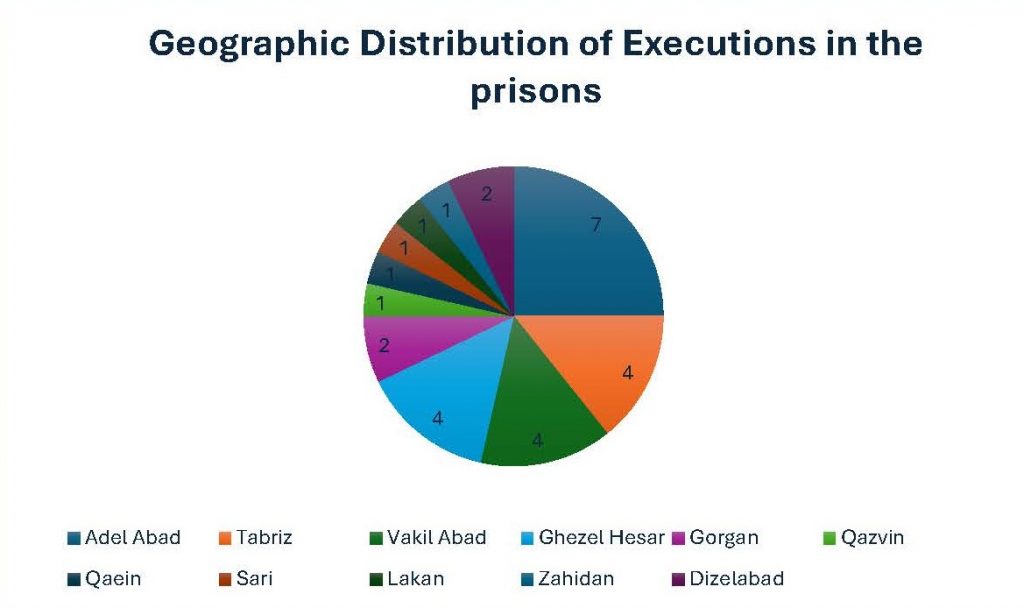
In Tir 1403 (21 June to 21 July 2024), executions took place in 11 provinces across 11 prisons in different cities of Iran.
- Fars Province: With a total of 7 executions (approximately 25%) in Adel Abad prison, Fars had the highest number of executions.
- Khorasan Razavi, East Azerbaijan, and Alborz: Each had 4 executions (each approximately 14%), ranking second.
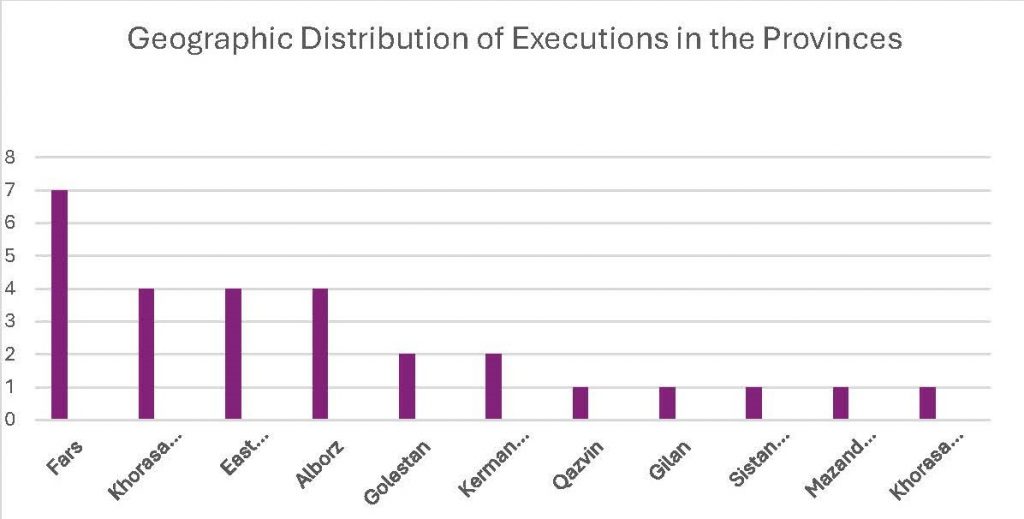
Furthermore, the geographic distribution of executions indicates that only one prison in each province carried out executions.
Among those executed, the identities of 5 individuals remain unknown, and one was a woman who was executed for the murder of her husband in Adel Abad prison. Regarding gender, 27 of the executed individuals were men and one was a woman. Additionally, 4 of the executed were Afghan nationals. Based on available data, the average age of those executed ranged from 28 to 47 years. There is limited information on the marital status of the victims, with only three cases documented by human rights organizations like Hrana and Haal Vash.

Reasons for Executions
In Tir 1403 (21 June to 21 July 2024), data shows that executions were carried out for various reasons:

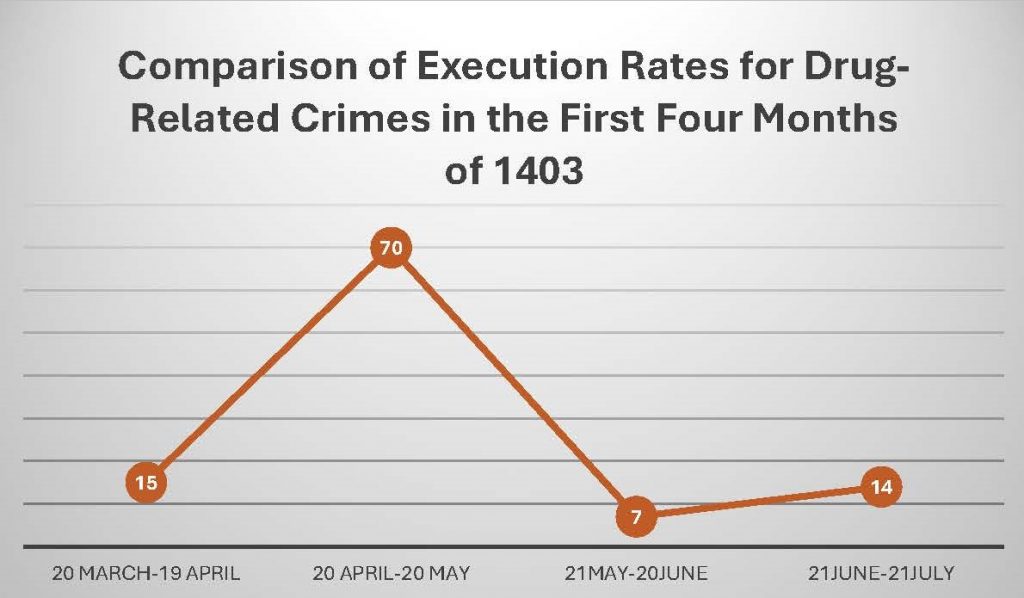
These statistics indicate that the highest number of executions in Iran is still related to drug offenses, accounting for half of the executions in Tir. Furthermore, a statistical comparison with the previous month, Khordad (21 May to 20 June 2024), shows that the number of executions for drug-related offenses has doubled.
Challenges in Reporting and Access to Information
One of the biggest challenges in reporting executions in Iran is the limited and difficult access to accurate and reliable information. Journalists and human rights activists often face obstacles such as government censorship, legal restrictions, and security risks when collecting and disseminating information. These issues are particularly pronounced in cases of executions that occur without prior notification or in silence. Additionally, limited access to prisons and judicial proceedings, along with a lack of transparency in the judicial process, creates further challenges for reporting.
These conditions result in reports that are sometimes incomplete or unbalanced, negatively affecting efforts to provide a real and comprehensive picture of the situation of executions in Iran. To present a true picture of the dire situation of executions in Iran, we need the support of all citizens who consider the right to life as the most fundamental human right. We are always ready to be your voice.