Introduction
On the occasion of May Day, we, the Iranian Association Against Executions (IFMA), call upon you to recognize the alarming and accelerating crisis of executions in Iran. On a day dedicated to the rights and dignity of working people, we remind you of those in Iran who are most vulnerable to the machinery of state violence: the poor, the marginalized, and the working class.
Iran: The World’s Leading Executioner
Recent reports confirm that while Iran remains one of the world’s top executioner states, the rate is dramatically accelerating. In 2024, Iran was responsible for at least 972 executions, accounting for 64% of all known executions worldwide, and this figure has continued to rise sharply in 2025. In the first three months of 2025 alone, at least 230 people have been executed, more than double the figure from the same period last year. This surge is not only a violation of the right to life but also a tool for instilling fear and suppressing dissent within Iranian society.
Disproportionate Impact on the Poor and Working Class
The death penalty in Iran disproportionately targets the most vulnerable groups, particularly workers from impoverished backgrounds. Many of those executed have been denied access to basic human rights such as education, healthcare, legal representation, and due process throughout their lives. Among the working class, many individuals suffer from multiple layers of marginalization.
Some workers began their lives as child laborers, forced to leave school and enter harsh labor markets at an early age. Others belong to marginalized ethnic, religious, or gender groups, facing additional discrimination and systemic neglect. These overlapping vulnerabilities increase their risk of criminalization, arbitrary arrest, unfair trials, and ultimately, execution.
In the following sections, we present specific examples that illustrate how workers — especially those with double or triple layers of marginalization — are among the primary victims of Iran’s machinery of repression.
1. Ehsan Mehdizadeh (1948-1981)
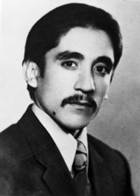
He was an Iranian Bahai. After completing his primary education, he worked in a pharmacy and a few years later, he was employed by the Pepsi-Cola Company. However, he became unemployed during the Islamic revolution in Iran and Anti-Baha’i politics. He was executed on April 30, 1981 for the crime of propagating the Baha’i faith in Adelabad prison in Shiraz.
2. Farnoush Vakilzadeh (1954-1981)
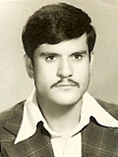
Farnoush was a driver and a member of the Union of Communist Fighters (Sahand), a group formed after the victory of the Islamic Revolution in 1979, primarily engaged in theoretical activities. He was arrested despite no evidence against him except for the discovery of two boxes of leaflets at his home. He was sentenced to death on charges of “waging war against God and His Prophet” (moharebeh) and “corruption on earth” (fesad al-arz). The exact date of his execution remains unclear; however, his body was returned to his family on June 22, 1981.
3. Shirin Alam-Holy (1981-2010)
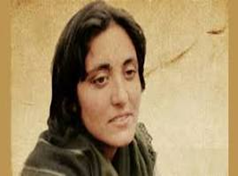
Shirin Alam-Holi was a young Kurdish woman from a village in West Azerbaijan, Iran. She worked as a carpet weaver and had no formal education, speaking only Kurdish. She was accused of being a member of PJAK and planting a bomb in the parking lot of the Islamic Revolutionary Guard Corps (IRGC) headquarters in western Tehran. Her execution was carried out without prior notification to her lawyer or family.
The IRGC later released a four-minute video, claiming that Shirin suffered from epilepsy and had been brainwashed by PJAK. However, her companions denied that she had epilepsy, instead stating that she suffered severe physical and psychological injuries from torture.
In her final letter from Evin Prison, Shirin wrote:
“The blows I received to the head during the torture have caused damage to this area. Some days my headaches are so severe that I no longer know what is going on around me, and eventually my nose starts to bleed from the pain.“
Shirin was executed on April 21, 2010. Her body was never returned to her family.
4. Omid Rostami (1996-2018)

Omid Rostami was both a child worker and a child offender. He left school in the third grade of middle school and began working in the manufacture of aluminum doors and windows. At the age of 16, he was arrested on charges of murder.
During his interrogation and the preliminary investigation, Omid was denied access to legal counsel. Despite his minor status at the time of the alleged crime, he was sentenced to death and executed on October 23, 2018.
5. The Women, Life, Freedom Upraising and the execution of workers in 2022

From left to right: Mohsen Shekari, Majidreza Rahnavard, Seyed Mohammad Hosseini, Majid Kazemi and Saeed Yaghoubi
During the protests known as the “Women, Life, Freedom” movement, at least eight individuals were executed by the Iranian authorities.
Among them, five were workers from ordinary professions — highlighting the regime’s systematic targeting of the working class:
- Mohsen Shekari (23 years old) – Barista.
Executed for allegedly blocking a street and lightly injuring a security officer. He was sentenced after a grossly unfair trial without access to proper legal defense.
- Majidreza Rahnavard (23 years old) – Fruit shop worker
Executed in public only 23 days after his arrest, following a forced confession extracted under torture.
- Seyed Mohammad Hosseini (40 years old) – Hatchery worker
Arrested for participating in protests and accused without evidence. His trial was rushed, and he described being severely tortured.
- Majid Kazemi (30 years old) – Handcraft worker
Involved in peaceful protests; he was sentenced to death based on confessions obtained under torture. His case drew international condemnation.
- Saeed Yaghoubi (37 years old) – Real estate agent
Tried alongside Majid Kazemi in the so-called “Isfahan House” case. He was denied a fair trial and was executed following allegations of involvement in protests.
These cases show that Iranian workers — from baristas to artisans — were not only deprived of labor rights but were executed for exercising basic freedoms such as protest and free expression.
Workers on Death Row
In addition to those already executed, a significant number of individuals currently facing execution in Iran come from working-class backgrounds. Many are laborers, small business workers, or unemployed youth from marginalized communities. They remain at extreme risk due to the Iranian judiciary’s pattern of issuing death sentences after unfair trials, often based on confessions extracted under torture. The death penalty continues to serve as a brutal tool to suppress the most vulnerable sectors of Iranian society, especially the working class.
Two current examples include:
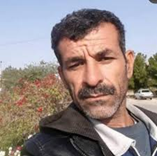
Abbas Deris a worker from Khuzestan, was arrested following the November 2019 protests. He was sentenced to death on charges of “enmity against God” (moharebeh) in connection with the killing of a police special forces commander, Reza Sayyadi.
However, no credible evidence linked Abbas to the shooting, and testimonies from security forces did not confirm his involvement. His confessions were allegedly extracted under torture, and the victim’s family did not file a complaint against him.

Sharifeh Mohammadi, a labor activist, is currently facing capital charges for her involvement in organizing workers’ rights activities. Her prosecution reflects the ongoing criminalization of peaceful labor activism in Iran.
These cases demonstrate that Iranian workers continue to face not only economic exploitation but also the ultimate threat of execution for asserting their basic rights.
The Growing Civil Movement Against Executions
Despite immense risks, a powerful civil movement is growing inside Iran. The “No to Execution Tuesdays” campaign, launched by political prisoners, has now entered its 65th week, with inmates in over 40 prisons participating in hunger strikes and protests against the death penalty.
This campaign, supported by Nobel laureate Narges Mohammadi and other prominent activists, demonstrates the Iranian people’s demand for justice, freedom, and an end to state violence.
Our Demands
We call on the international community, the United Nations, the International Labour Organization (ILO), and all human rights organizations to:
- Condemn the sharp increase in executions in Iran and recognize the death penalty as an inherent violation of human rights.
- Demand an immediate moratorium on all executions in Iran, in line with the recent UN General Assembly resolution supported by more than two-thirds of member states.
- Support Iranian civil society movements, including the “No to Execution Tuesdays” and the “Global Campaign for No to Executions” as well as all human rights defenders working for freedom and democracy.
- Insist on fair trials, due process, and the prohibition of torture and forced confessions in accordance with international law.
- Press the Iranian government to return the bodies of executed prisoners to their families and to end the practice of secret executions and enforced disappearances.
Conclusion
The use of the death penalty in Iran is not only a legal issue but a profound human rights crisis that targets the most vulnerable members of society. We urge you to stand with the people of Iran in their struggle for dignity, justice, and life. The world must not remain silent in the face of such inhumanity.
We thank you for your attention and solidarity.
“Workers Deserve Rights, Not Execution”
With hope for a future free from executions,
Iranska Föreningen Mot Avrättningar (IFMA)
For further information and to join us, please contact us directly or follow our activities in solidarity with the global movement against the death penalty.