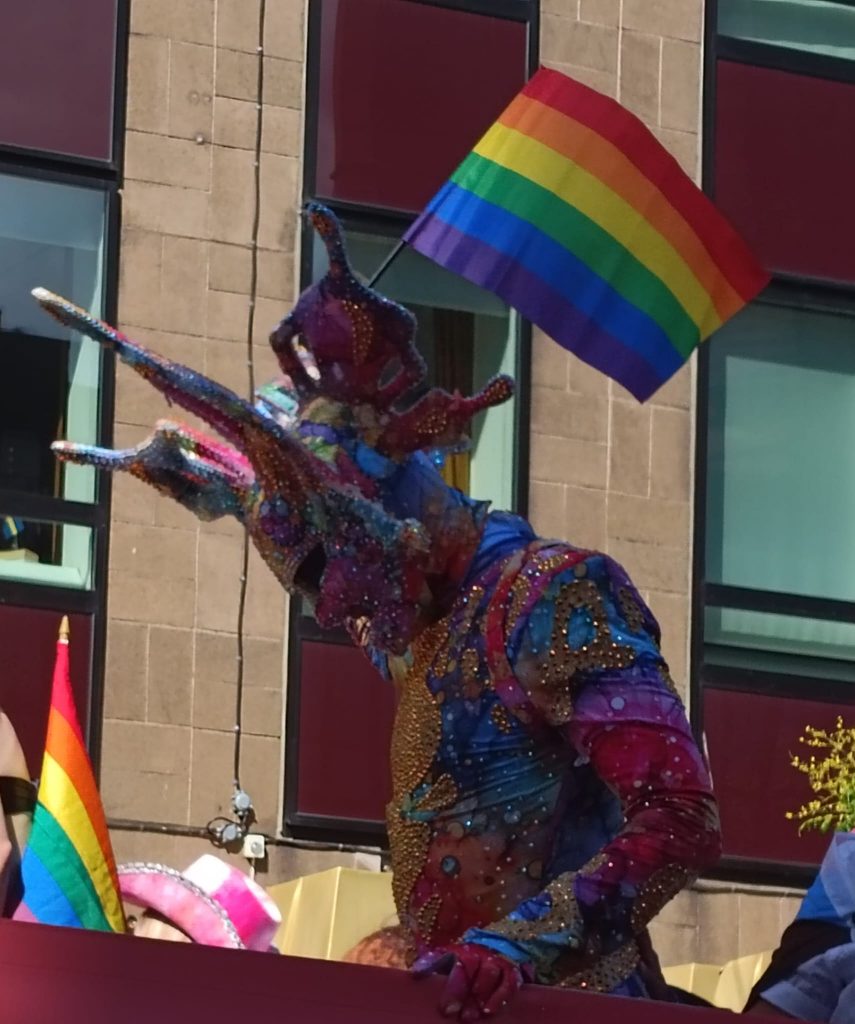
Today, August 1, 2026, the streets of Stockholm came alive with the Pride Parade. Thousands of people lined both sides of the streets, cheering, applauding, and waving rainbow flags in a powerful display of solidarity—not only with the LGBTQ+ community, but also with the universal values of freedom, equality, human dignity, and every person’s right to live without fear.
The parade was more than a celebration; it was a reminder of the long and often painful journey that generations of activists have undertaken to secure these rights. Freedom and equality are not gifts bestowed by governments. They are the hard-won achievements of people who challenged discrimination, endured persecution, and worked tirelessly through dialogue, education, and peaceful resistance to dismantle the walls of ignorance and prejudice.
Yet, not far away, in Iran, a starkly different reality persists. Many people are humiliated, stigmatized, and ostracized simply because of their sexual orientation or gender identity. Derogatory slurs replace respect, and in the eyes of many, LGBTQ+ individuals are viewed not as citizens deserving equal rights, but as “sick” or “criminal.”
Under the laws of the Islamic Republic of Iran, certain same-sex relations remain criminalized and, in some circumstances, may carry the death penalty. Over the past decades, these laws have claimed lives and continue to instill fear in the lives of LGBTQ+ people across the country.
In 2005, Mahmoud Asgari, aged 16, and Ayaz Marhoni, aged 18, were publicly executed in Mashhad. That same year, Mokhtar N., 24, and Ali A., 25, were also publicly executed. While the details of some of these cases remain disputed between Iranian authorities and international human rights organizations, there is no dispute that Iranian law continues to prescribe the death penalty for certain same-sex acts, leaving many LGBTQ+ Iranians to live under the constant threat of persecution.
The Pride Parade in Stockholm was not merely a celebration of one community; it was a reminder that human rights know no borders. As long as people anywhere in the world are humiliated, imprisoned, or executed for being who they are, the struggle for freedom and equality remains unfinished.
Perhaps the greatest lesson of this day is that a truly free society is not one in which everyone is the same. It embraces diversity and safeguards every person’s right to be different.